
Ohio college student participants in the 2026 AI Research Experience (AIRE) program learned how to use artificial intelligence (AI) tools and high performance computing (HPC) resources to examine solutions for real-world issues such as earthquake and flood forecasting, autonomous vehicle safety, and wildlife conservation.
The nine-week summer AIRE program provides funding to Ohio students interested in working on an AI-focused research project with faculty and staff from Case Western Reserve University, The Ohio State University, the University of Cincinnati, and the Ohio Supercomputer Center (OSC). AIRE, managed by the OH-SCIPE project and funded by the National Science Foundation, is part of a broader effort to train more cyberinfrastructure professionals that can provide technical expertise to university researchers using AI and machine learning technologies.
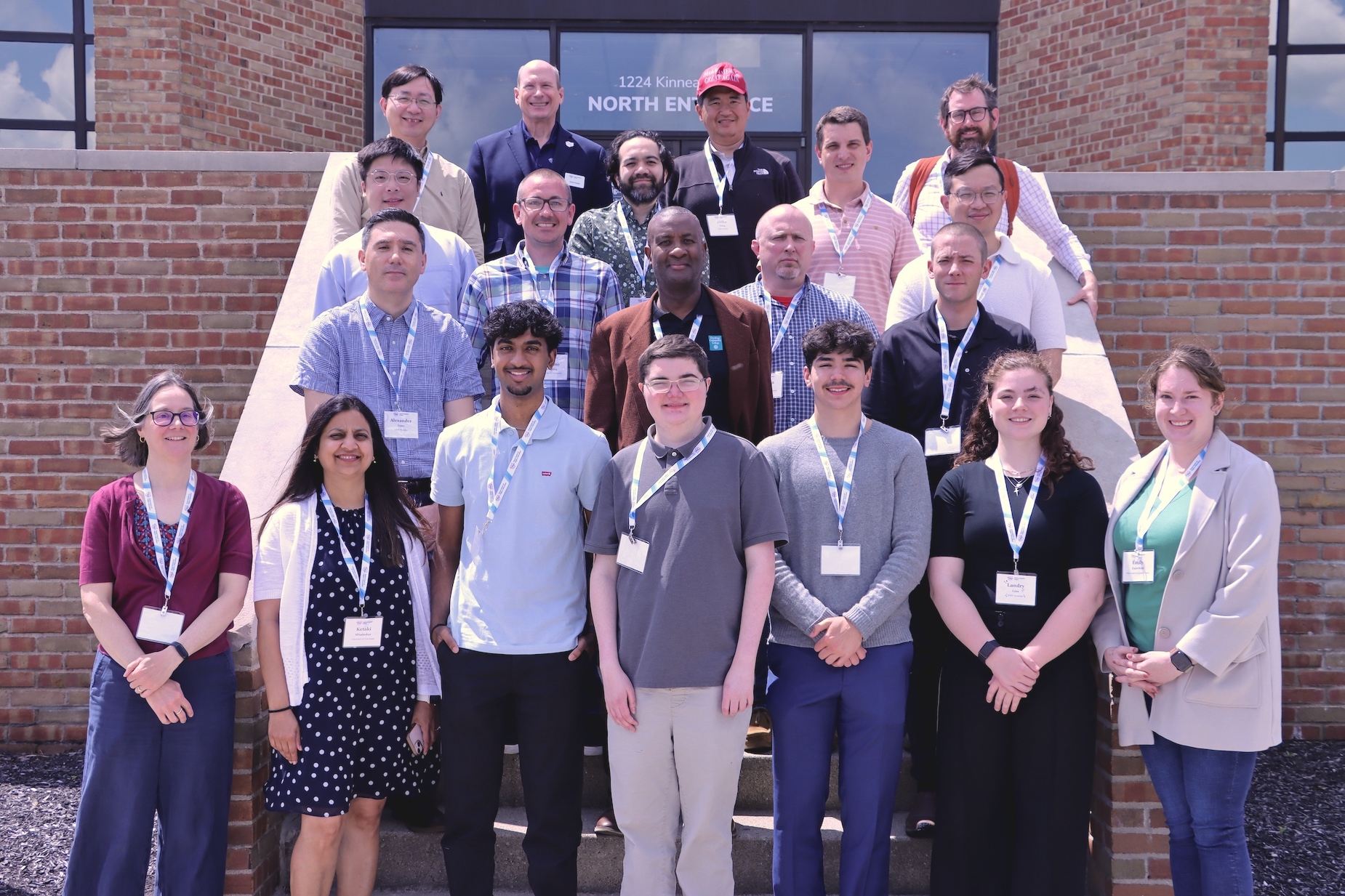
The students selected for the program gained hands-on experience with research methods, coding, HPC systems, and applying AI and machine learning models to research problems while working with Ohio academics in a variety of science and engineering fields.
“AIRE participants valued the chance to move beyond the classroom and explore the benefits and challenges of using AI tools to investigate open-ended problems in real-world research settings,” said Karen Tomko, OSC director of research software applications and a co-investigator on the OH-SCIPE project.
The 2026 AIRE program attracted participants from higher education institutions across Ohio:
- Alexander Gose, Sinclair Community College, worked with mentor Nathan Elrod, University of Cincinnati, on the project “Multi-Modal and Multi-Agent AI Crisis Response Testbed.”
- Brody Green, Sinclair Community College, worked with mentor Kuanshi Zhong, University of Cincinnati, on the project “Non-ergodic correlation models of sequential earthquake ground motions.”
- Daniel Jung, Cuyahoga Community College, worked with mentor Sanmukh Kuppannagari, Case Western Reserve University, on the project “AI-Driven High-Throughput Platform for Polymer Structure–Property Relationships.”
- Garfield Lawrence, Cuyahoga Community College, worked with mentor Yu Yin, Case Western Reserve University, on the project “Learning Generalizable Manipulation Policies via Vision-Language-Action (VLA) Models.”
- Landry Lies, Ohio State, worked with mentors Matthew Thompson and Elizabeth Campolongo, Ohio State, on the project “Workflow or it didn’t happen: Reproducibility in AI research for science.”
- Maxwell Lyman, Sinclair Community College, worked with mentor Sadegh Riasi, University of Cincinnati, on the project “Benchmarking ML/AI Models for Data-Driven Streamflow Forecasting.”
- Avyukth Rangarajan, Ohio State, worked with Sumon Biswas, Case Western Reserve University, on the project “Fairness Evaluation of Vision-Language Models for Autonomous Driving.”
- Dylan Winger, Northwest State Community College, worked with Joe Johnson, University of Cincinnati, on the project “Artificial intelligence for analysis of wildlife imagery.”
This year’s projects reflected the wide array of research problems that can be investigated with AI models and powered by OSC’s HPC resources.
Several students trained AI models to examine biological and environmental science issues, such as predicting damage from natural disasters and tracking wildlife populations.
Using data from the U.S. Geological Survey, Lyman analyzed whether machine learning models can forecast floods, such as the deadly weather events that occurred in Texas in 2025. Winger used AI models to process large collections of images of an endangered bat species to understand their population patterns across seasons.
Other students used AI tools to explore problems in industry, including the automotive and manufacturing fields.
Rangarajan examined the accuracy of vision language models that autonomous driving vehicles use to detect pedestrians in the roadway, making critical safety decisions. Lawrence studied how visual language action models can help control the movements of robots in factories or domestic settings.
The students expressed appreciation for the opportunity to learn or expand their skills in python coding, collaborate with academic mentors, analyze research results, refine experiment designs, and utilize HPC resources.
“I had a blast participating in the AIRE program, and I genuinely did not want it to end,” Gose said. “I especially valued the open-ended nature of the program, which gave me room to pursue a project suited to my background and interests.”
“My final project turned out to be very informative, and I learned quite a bit,” Lyman said. “Sadegh was a great mentor and was clearly interested in helping me understand the material. He treated me as a peer capable of contributing to something meaningful.”
Students interested in participating in the next cohort of the AIRE program will have the opportunity to apply for admission during spring 2027.
The Ohio Supercomputer Center (OSC) addresses the rising computational demands of academic and industrial research communities by providing a robust shared infrastructure and proven expertise in advanced modeling, simulation, and analysis. OSC empowers scientists with the services essential to making extraordinary discoveries and innovations, partners with businesses and industry to leverage computational science as a competitive force in the global knowledge economy, and leads efforts to equip the workforce with the key technology skills required for 21st-century jobs.
