
As cybersecurity education grows in popularity at colleges and universities across the U.S., students are finding new ways to gain hands-on experience tackling real-world scenarios in advanced computing environments.
At Commonwealth University–Bloomsburg, students chose to stage a capture-the-flag competition that placed participants inside a simulated high performance computing (HPC) environment, challenging them to navigate and secure systems modeled after computing infrastructure.
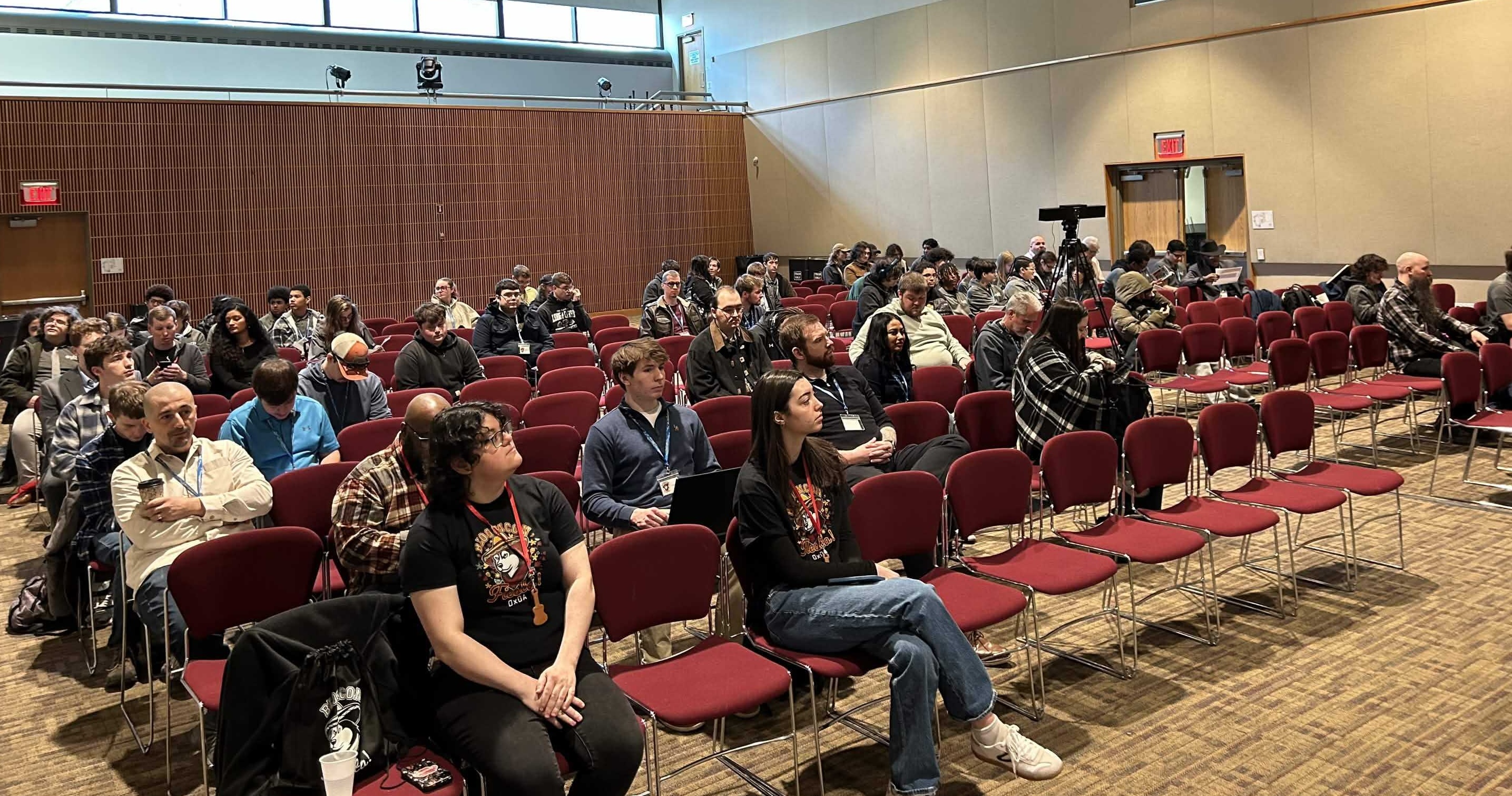
The competition was part of BloomCON 0x0A, the university’s annual cybersecurity conference, designed and hosted by members of the Bloomsburg Digital Forensics and Cyber Defense Club.
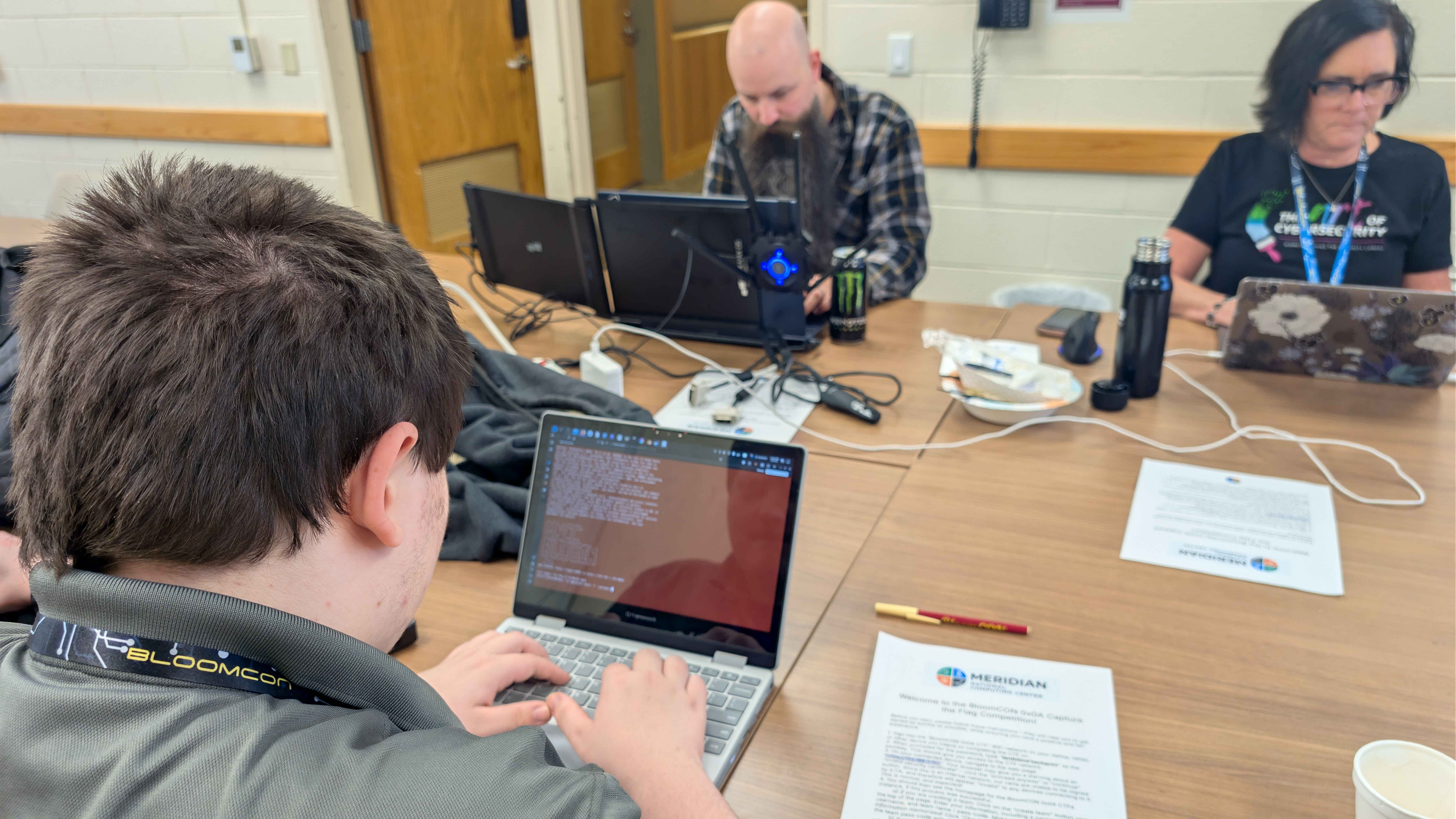
Commonwealth University–Bloomsburg, a campus of Commonwealth University of Pennsylvania located in Bloomsburg, Pennsylvania, serves more than 7,000 students as part of the Pennsylvania State System of Higher Education.
Powered by Open OnDemand—an open-source platform developed by the Ohio Supercomputer Center that provides browser-based access to advanced computing—the experience gave students direct interaction with HPC systems.
“Primarily it’s to get people hands-on experience,” said Arleigh Shilling-Askew, co-president of the Digital Forensics and Cyber Defense Club. “A lot of the work we do is more digital forensics, but we don’t do a ton of cybersecurity hands on. So, we try to do more of that technical work to make sure we have actual practical application instead of just theoretical terms and acronyms floating around.”
Designed over the course of several months in collaboration with alumni and industry partners, the competition challenged participants to investigate and respond to a compromised computing environment—mirroring the types of scenarios cybersecurity professionals face in real HPC systems.
Rather than following step-by-step instructions, participants were given objectives and left to determine how to accomplish them.
“Capture the flag is essentially: Here’s something we want you to do—we’re not going to tell you how to do it, but it needs to get done,” said Mike Frauenhoffer, an alumnus and manager at Penntesters, who led development of the competition.
To make the experience accessible—especially for participants with no prior HPC experience—the team turned to Open OnDemand, identified by Frauenhoffer after evaluating multiple HPC frontend frameworks. He noted that the team selected Open OnDemand for its robust features and ease of deployment.
“The big thing was removing the need for students to understand everything with SSH (a type of command-line interface) right away,” Frauenhoffer said. “Getting them directly into something that has a GUI-type interface, it really puts someone into the environment quicker.”
For student organizers, accessibility was just as important.
“I hadn’t interacted with any sort of supercomputing environment before,” Shilling-Askew said. “But Open OnDemand allowed me to get my foot in the door. I was able to go in and provide feedback and test ideas, and I wouldn’t have been able to do that otherwise.”
That impact extended to participants across all experience levels, including high school students encountering HPC for the first time.
“We had high schoolers come in, people who had no idea what supercomputing was,” Shilling-Askew said. “They were able to run commands, log into a node, and try their hand at it.”
For many, the experience wasn’t about solving every challenge—it was about exposure and exploration.
“Once they got over that initial fear, they would actually play around with it,” he said. “Maybe they didn’t get everything right, but they learned something in the process.”
Teachers who attended with their students saw that impact firsthand.
“They really, really valued that experience,” said Ashley Chila, co-president of the Digital Forensics and Cyber Defense Club and conference coordinator. “It was really cool, but also just great exposure—especially for students who want to go into fields that use this kind of technology.”
For students like Tyler Burgess, administrative assistant for the club, the experience opened the door to new possibilities.
“To actually see Open OnDemand in action makes you think about how you could use it in the future and pushes you to learn more,” he said.
That interest is already shaping future plans for the club. While Commonwealth University–Bloomsburg does not currently have a dedicated supercomputing system, students are working to build a “replica” HPC cluster using repurposed servers and equipment, with Open OnDemand serving as the primary interface.
What began as a student-led competition is now evolving into an ongoing resource—extending the impact of BloomCON and creating new opportunities for students to explore advanced computing in practice.
Written by Lexi Biasi
The Ohio Supercomputer Center (OSC) addresses the rising computational demands of academic and industrial research communities by providing a robust shared infrastructure and proven expertise in advanced modeling, simulation and analysis. OSC empowers scientists with the services essential to making extraordinary discoveries and innovations, partners with businesses and industry to leverage computational science as a competitive force in the global knowledge economy and leads efforts to equip the workforce with the key technology skills required for 21st century jobs.
