
The Ohio Supercomputer Center (OSC) has released version 4.2.2 of Open OnDemand—an open-source web portal used by high performance computing (HPC) centers to offer researchers and students easy access to computational resources—to comply with new U.S. digital accessibility regulations.
Title II of the Americans with Disabilities Act (ADA) requires local and state government entities to ensure that their web content and mobile apps are accessible to people with disabilities. OSC has updated Open OnDemand, its documentation page, website, and Appverse directory of compatible software applications, in advance of the April 2027 deadline for compliance with the federal Web Content Accessibility Guidelines (WCAG) Version 2.1, Level AA. Many Open OnDemand deployments are at government-affiliated centers that are subject to the guidelines.
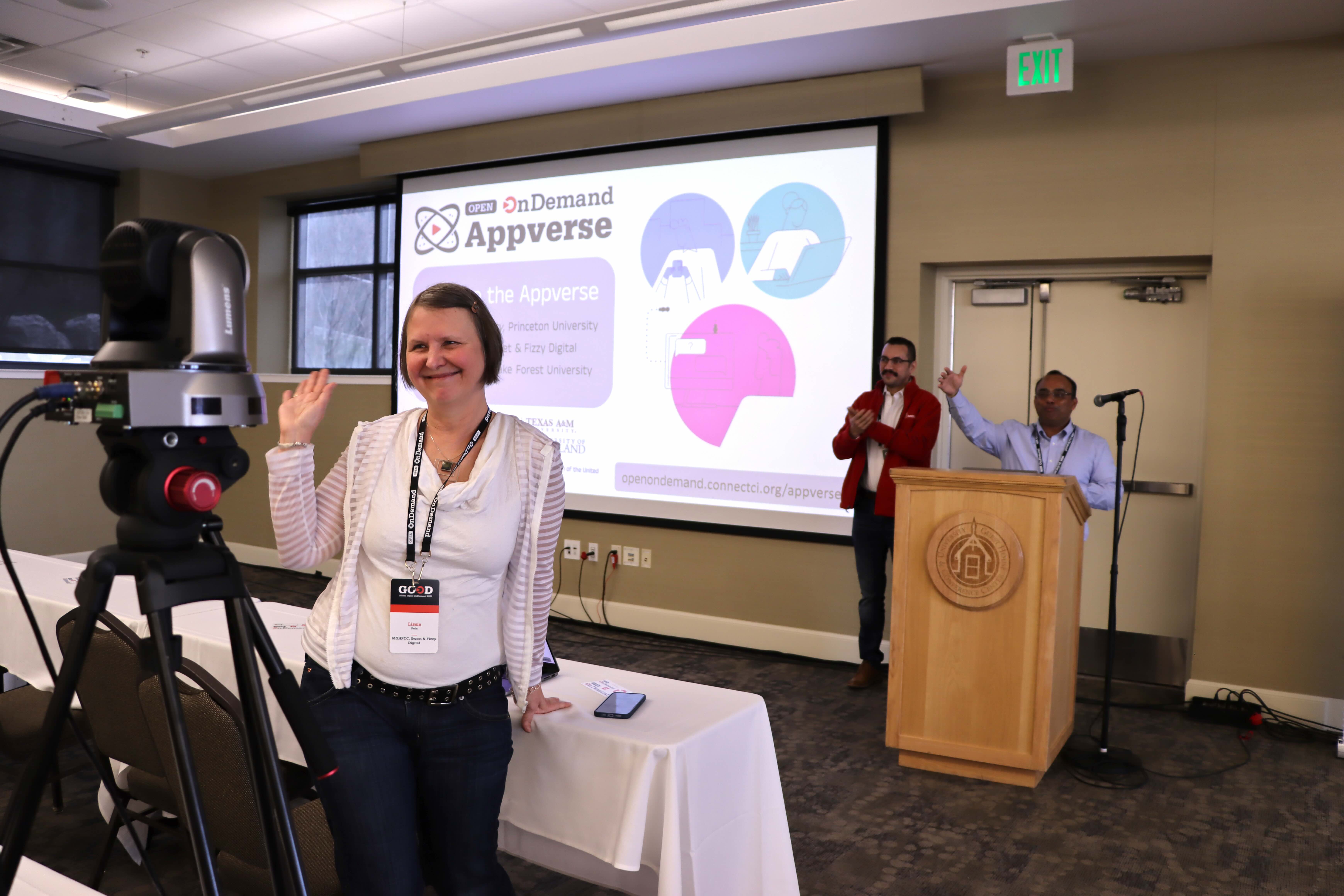
“Ensuring broad access to HPC resources is at the heart of why OSC developed Open OnDemand and has promoted the adoption of it to HPC centers around the globe,” said Alan Chalker, OSC director of strategic programs and Open OnDemand project lead. “The updates in version 4.2.2 of our web portal support our efforts to make HPC readily accessible to students, faculty, researchers, and innovators in a wide variety of academic fields and industries.”
Open OnDemand has published an Accessibility Conformance Report (ACR) on its accessibility webpage and also has an accessibility policy as part of the official GitHub repo.
Many of the changes in version 4.2.2 are designed to assist screen readers used to navigate web content. Users also may notice adjustments in how Open OnDemand displays some information: Content will remain within one browser tab (instead of actions opening a new tab), and expanded content in the active jobs app will display in a side window in lieu of a vertical view.
Members of the global Open OnDemand community contributed to the 4.2.2 release by providing feedback about the accessibility updates. Collaborators at the University of Washington, CESNET, SciNet – University of Toronto, Colorado School of Mines, CSC – IT Center for Science, and the Pacific Northwest National Laboratory made notable code contributions, Chalker said
“We have always invited members of the HPC community to innovate enhancements and technical solutions for the web portal,” Chalker said. “As a result of their contributions, Open OnDemand is a stronger platform that continues to be an asset to anyone learning or utilizing HPC for research and education.”
While version 4.2.2 was designed to address U.S. digital accessibility guidelines, OSC encourages comments and suggestions from its global users about other standards it should evaluate for the platform, Chalker said.
In addition to the accessibility updates, Open OnDemand version 4.2.2 features changes such as:
-
The Software Bill of Materials will now feature an industry-standard format.
-
Support for Debian 13 has been added.
-
While Open OnDemand will no longer support Ubuntu 22.04 in this version, it adds support for Ubuntu 26.04.
-
Open OnDemand is also working on a plan to address an issue with EL10 that prevents interactive desktops from launching.
For more information on other updates in Open OnDemand 4.2.2, visit the release notes page and read more about accessibility configurations.
Written by Andrea Gibson
The Ohio Supercomputer Center (OSC) addresses the rising computational demands of academic and industrial research communities by providing a robust shared infrastructure and proven expertise in advanced modeling, simulation and analysis. OSC empowers scientists with the services essential to making extraordinary discoveries and innovations, partners with businesses and industry to leverage computational science as a competitive force in the global knowledge economy and leads efforts to equip the workforce with the key technology skills required for 21st century jobs.
