
Researchers, developers, system administrators, engineers, and students who share an interest in the MVAPICH open-source library for high performance computing (HPC) are gathering at the Ohio Supercomputer Center (OSC) Monday, Aug. 17, through Wednesday, Aug. 19, for the 14th meeting of the MVAPICH Users Group (MUG).
The Network-Based Computing Research Group led by Dhabaleswar K. “DK” Panda, a professor of computer science at The Ohio State University, developed and maintains the popular HPC system software package, which is used by more than 3,500 organizations in 94 countries worldwide. As of August 2026, more than two million downloads have occurred from the project's site. The software is distributed by many vendors and powers several supercomputers in the TOP500 list of global supercomputing systems.
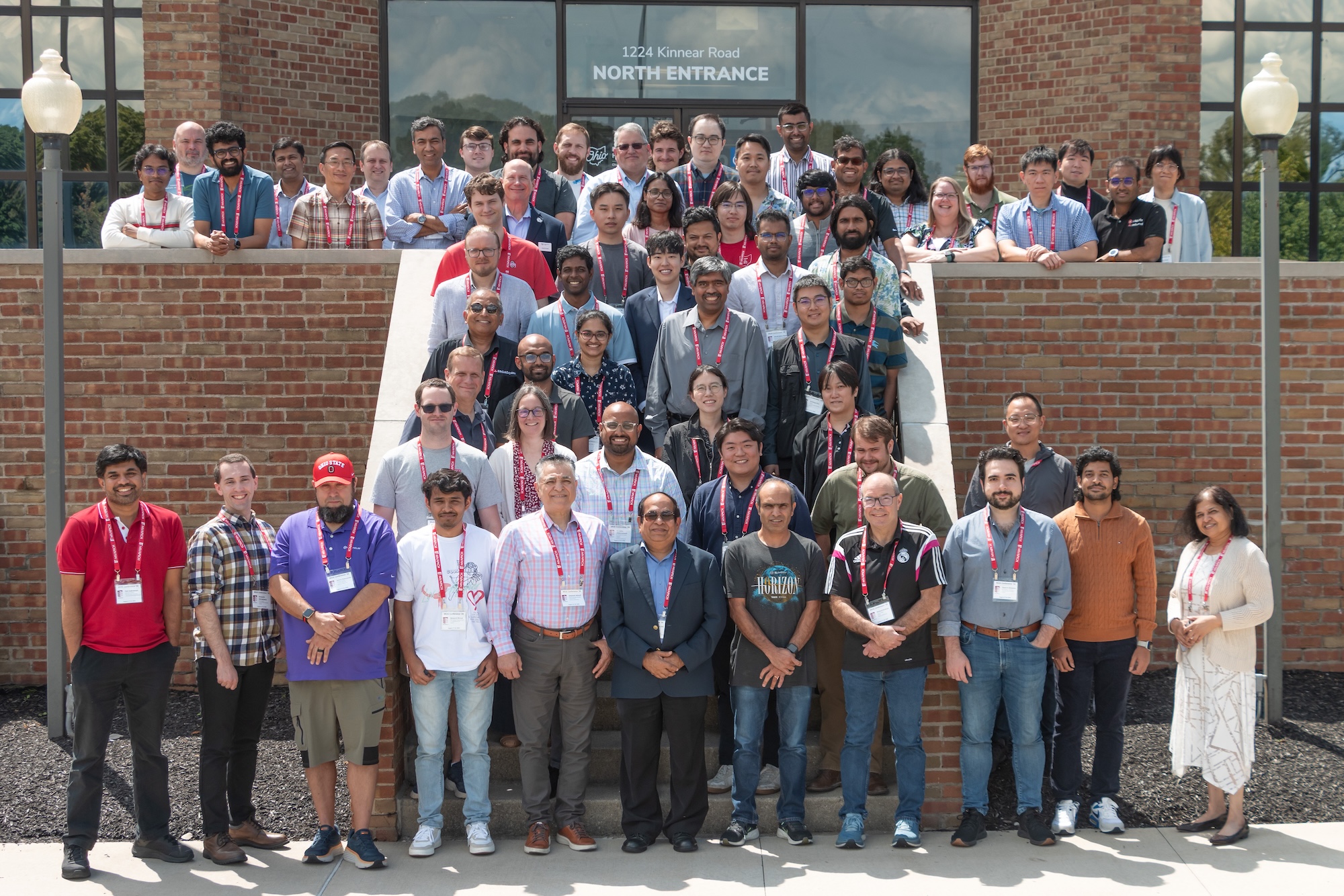
“We are pleased to feature more than two dozen academic and industry speakers from across the globe at this year’s conference,” Panda said. “This annual meeting is a great opportunity for our growing user base to share their knowledge and experiences and learn from each other.”
In addition to expert talks, the event will feature presentations from the MVAPICH team on tuning and optimization strategies for various components, an interactive/hands-on session with the MVAPICH developers to discuss issues, and student poster presentation sessions.
Sponsors of this year’s event are 1Finity, Broadcom, Cornelis Networks, National Science Foundation, D-Matrix, Keysight, NVIDIA, Ohio State, ParaTools, X-ScaleSolutions, and OSC.
“OSC is excited to sponsor and host the MVAPICH Users Group meeting,” said Karen Tomko, OSC director of research software applications. “As many OSC clients rely on the software package, we are pleased to provide a forum in which the developers and users can exchange information and optimize its use in their high performance computing work.”
OSC and Panda have collaborated on several research initiatives, including the AI Institute for Intelligent CyberInfrastructure with Computational Learning in the Environment (ICICLE), as well as a new National Science Foundation-funded project, “Collaborative Research: Frameworks: Designing Next-Generation HPC and AI Middleware with Power-Performance Tradeoffs.”
Visit the MUG conference website for more details about this year’s program.
The Ohio Supercomputer Center (OSC) addresses the rising computational demands of academic and industrial research communities by providing a robust shared infrastructure and proven expertise in advanced modeling, simulation, and analysis. OSC empowers scientists with the services essential to making extraordinary discoveries and innovations, partners with businesses and industry to leverage computational science as a competitive force in the global knowledge economy, and leads efforts to equip the workforce with the key technology skills required for 21st-century jobs.
