
At the National Center for Supercomputing Applications (NCSA) at the University of Illinois Urbana-Champaign, advanced computing powers research across disciplines, institutions, and experience levels. Founded in 1986 as one of the original supercomputer centers established under the National Science Foundation's (NSF) Supercomputer Centers Program, NCSA provides high performance computing, data, networking, and visualization resources to scientists and engineers across the United States.
Researchers access NCSA’s nationally allocated systems through programs such as the NSF ACCESS initiative, while campus and industry users engage through institutional partnerships. Supported by the NSF, the state of Illinois, and the University of Illinois, the center enables work in fields ranging from artificial intelligence and astrophysics to digital agriculture and health sciences.
As demand for machine learning and data-driven workflows increased, NCSA recognized that traditional access models were becoming a barrier for many of its users. Researchers without extensive command-line experience often struggled to take full advantage of advanced computing resources, prompting the team to look for a more accessible way to interact with these systems.
Broadening access across a national research community
To address that challenge, NCSA implemented Open OnDemand, a browser-based interface designed by the Ohio Supercomputer Center to simplify access to high performance computing systems. The platform’s initial deployment at NCSA in 2019, alongside its HAL cluster—an NSF-funded system developed to support machine learning research—marked a shift in how users accessed computing resources and helped set the model for broader adoption across the center.
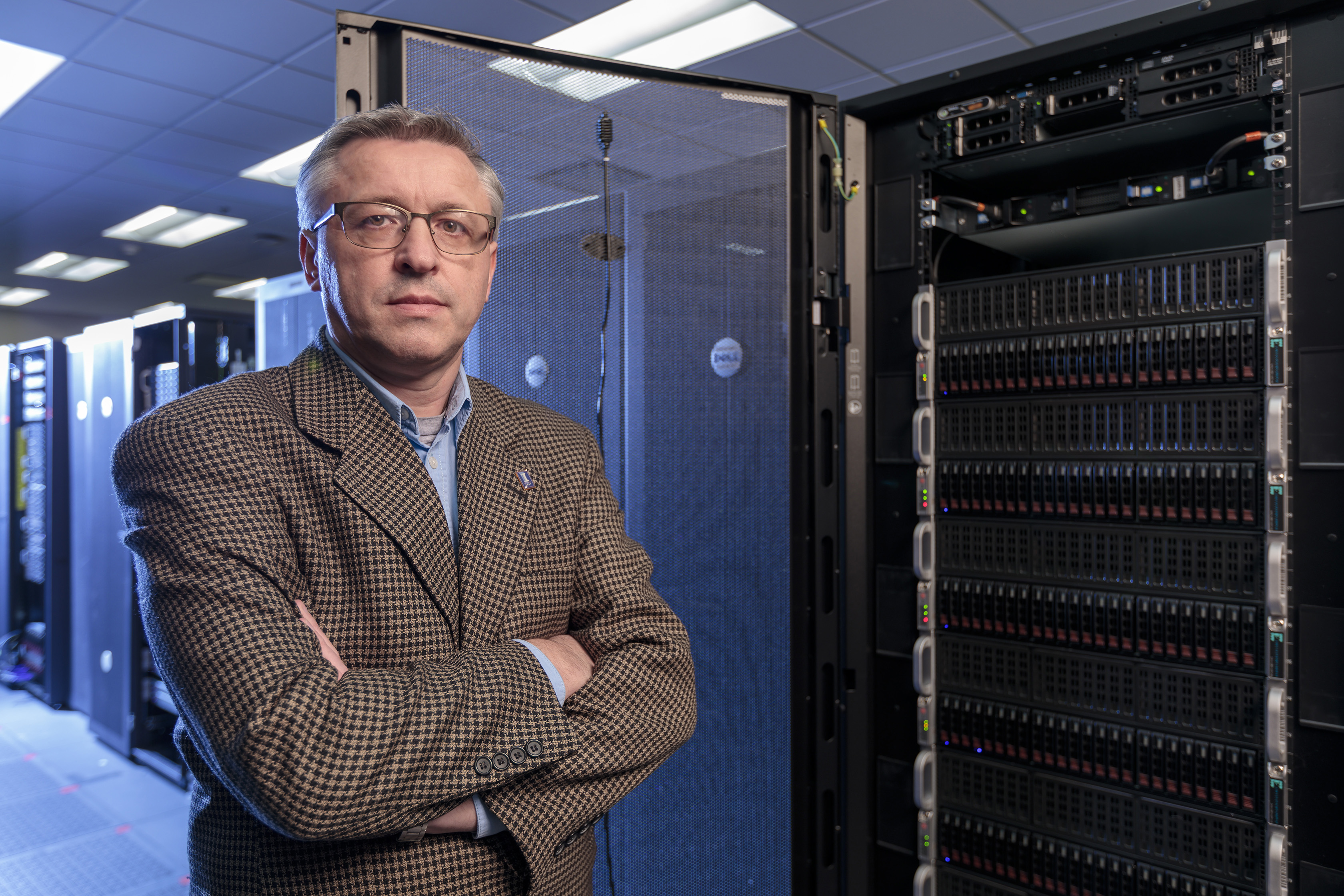
As machine learning tools became more widely adopted across disciplines—including biology, geospatial science, social science, and digital humanities—NCSA saw an increasing number of researchers who relied on interactive environments rather than traditional command-line workflows.
“Many of our HAL users are people who want to train models, but they are not all computer science or engineering majors,” said Volodymyr Kindratenko, director for NCSA’s Center for AI Innovation (CAII). “They tend to have difficulty logging in and working through the terminal and beyond.”
Before Open OnDemand, users had to follow a series of manual, command-line-based steps to launch interactive sessions—a process that was often fragile and difficult to troubleshoot. Even small missteps could derail the workflow entirely.
“We constantly had users who mistyped something or did something different,” Kindratenko said. “It just never worked for them.”
Lowering barriers for interdisciplinary researchers
With Open OnDemand in place, the way researchers interacted with NCSA’s systems began to change almost immediately. Tasks that once required multiple manual steps could now be launched through a web browser, reducing friction and lowering the barrier to entry for interactive computing.
“The very first most useful application for us was the ability to launch a Jupyter notebook,” Kindratenko said. “You click a button, your Jupyter is there, on a compute node with whatever resources you need.”
The impact was decisive. Experienced users who preferred working through the command line continued to do so, while a large—and growing—group of researchers gravitated to Open OnDemand as their primary entry point to NCSA’s systems. Over time, the center expanded the set of interactive applications available through the platform to include JupyterLab, TensorFlow, H2O, and later, a VS Code server.

“Once we deployed it, there was no way to go back,” Kindratenko said. “We had users who demanded it.”
What began as a solution for a single system soon became a model for the rest of NCSA’s computing ecosystem.
Scaling a consistent interface across multiple systems
Across NCSA’s campus and nationally allocated platforms, Open OnDemand has supported approximately 1,700 unique users and more than one million jobs since 2019—with steady growth in adoption across the center.
Today, Open OnDemand is deployed across six NCSA computing environments, each serving different communities, funding models, and research needs—including NSF-funded national systems, campus clusters, geospatial research platforms, and infrastructure supporting private-sector partners.
“All of these are different resources with very diverse users,” said Gregory Bauer, senior technical program manager at NCSA. “But once one of them learned how to deploy and operate Open OnDemand, the expertise spread quickly.”
Because many of the same system administrators support multiple resources, early experience with Open OnDemand enabled rapid replication. Rather than building heavily customized portals for each system, the team focused on consistency—providing a familiar interface and a shared set of interactive tools wherever possible.
“We would characterize our efforts as modest customization,” Bauer said. “But that’s actually been an advantage. We didn’t need to reinvent the interface every time.”
The result is a familiar interface that supports a wide range of users and workflows without fragmenting the experience. Whether working on campus or remotely, researchers can launch interactive sessions through a web browser, reducing technical overhead while preserving flexibility for more advanced use cases.
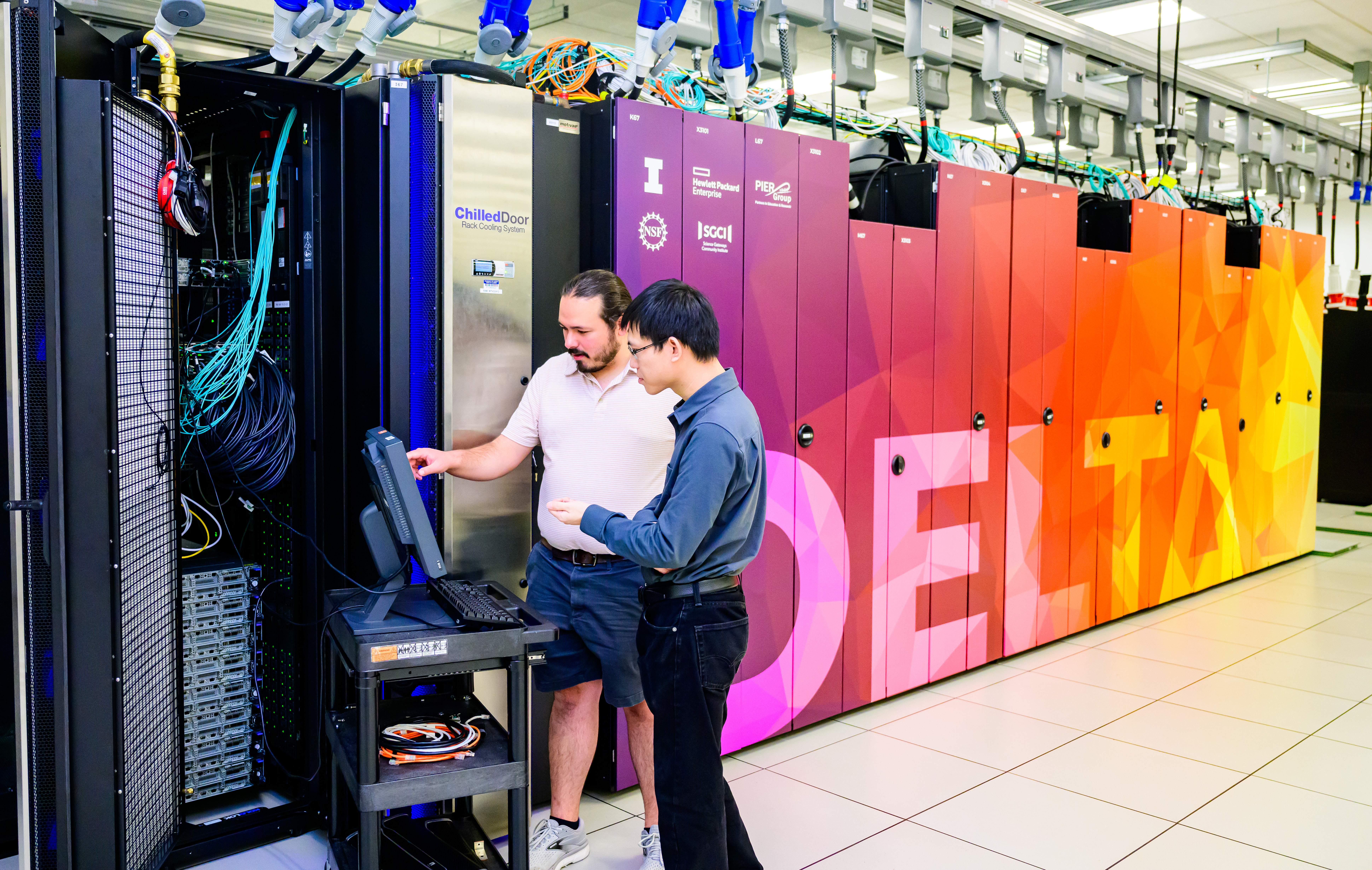
“During recent travel, I didn’t have my work laptop,” Bauer said. “I used Open OnDemand on a tablet through the browser to access a cluster, and it worked.”
Beyond usability, Open OnDemand has also helped NCSA scale access without proportionally increasing support demands. By standardizing how users launch and interact with applications, the platform reduces the number of custom workflows that staff must troubleshoot—an important consideration for shared systems running with finite operational resources.
At the same time, NCSA views Open OnDemand as part of a broader strategy to expand participation in advanced computing.
“We’re trying to broaden participation and lower the barriers to entry for new users,” said Brett Bode, assistant director of the National Science Foundation’s Delta and DeltaAI systems at NCSA. “Open OnDemand is one of the routes we’re using to achieve that.”
Building on community-driven innovation
Looking ahead, the team is exploring new interactive applications—particularly in genomics and other data-intensive research areas—by drawing on tools developed and shared by the Open OnDemand community. That collaborative ecosystem, they say, continues to strengthen the platform’s value over time.
“One of the attractive features of Open OnDemand is this large community of developers that contribute interactive apps and make them available,” Bauer said. “We can build on what other institutions have already done.”
For NCSA, Open OnDemand has evolved from a targeted usability solution into a foundational access layer—one that supports beginners and experts alike, spans multiple systems, and adapts as research needs continue to grow. While the resources it supports may differ, the goal remains consistent: meeting researchers where they are and lowering barriers to advanced computing.
Written by Lexi Biasi
The Ohio Supercomputer Center (OSC) addresses the rising computational demands of academic and industrial research communities by providing a robust shared infrastructure and proven expertise in advanced modeling, simulation and analysis. OSC empowers scientists with the services essential to making extraordinary discoveries and innovations, partners with businesses and industry to leverage computational science as a competitive force in the global knowledge economy and leads efforts to equip the workforce with the key technology skills required for 21st century jobs.
