
For students learning data science and scientific computing, the difference between theory and practice often comes down to one thing: access to the right hardware and software.
At the University of Mount Union, students are not only learning the principles behind programming, data analysis, and computational modeling, but are running their work on the same high performance computing (HPC) infrastructure used by researchers across Ohio.
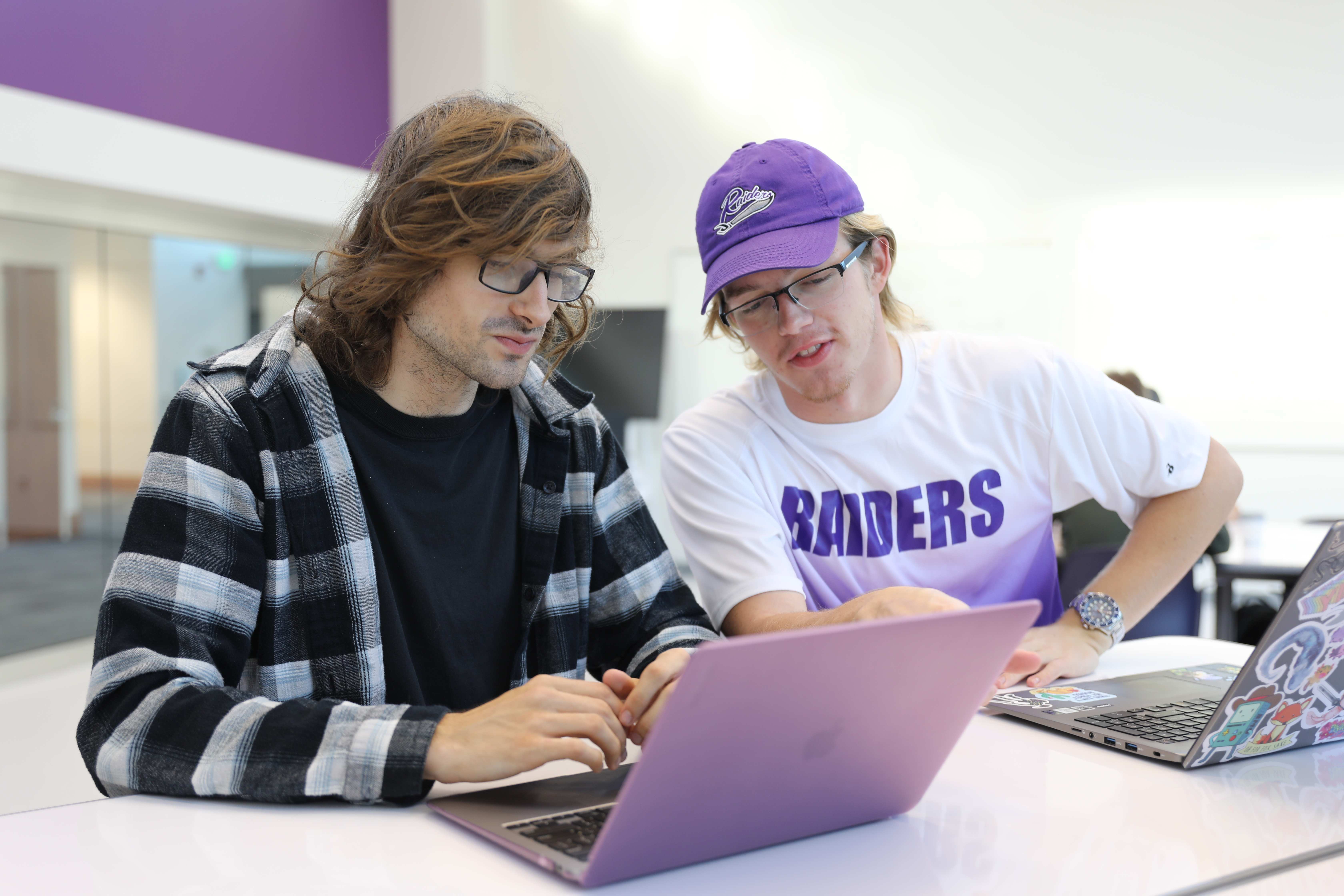
Through the Ohio Supercomputer Center (OSC), Mount Union faculty are integrating advanced computing directly into the classroom, supporting research, teaching, and student projects.
“We use OSC for all three categories,” said Colin Campbell, associate professor of physics and data science at Mount Union, a higher education institution in Alliance, Ohio, that enrolls around 2,400 students.
Campbell represents Mount Union in OSC’s Campus Champions program, a statewide network of faculty advocates who connect researchers, instructors, and students on their campuses with OSC resources while raising awareness of the benefits of using HPC.
Bringing high performance computing into the classroom
Across Mount Union’s Computer Science and Data Science and Analytics programs, OSC has become a key part of the learning environment, giving students hands-on experience with large-scale computing.
One of the biggest advantages of using OSC is removing a common barrier instructors face when introducing computational tools: ensuring every student has access to the same computing setup.
“The classroom environment offered by OSC helps many students because it removes the need to install and manage a computing environment on their personal computers,” Campbell said. “In introductory courses, OSC helps students get up and running quickly and avoid getting sidetracked by configuration issues. In more advanced courses, OSC allows us to scale beyond what can be done on local computers.”
Adam Hartley, assistant professor of computer science at Mount Union, integrates OSC into both his teaching and research. His work focuses on machine learning and artificial intelligence (AI) applications in scientific research.
“I personally utilize OSC for my own research projects, I use OSC during my lectures and demonstrations when appropriate to the material, and I recommend OSC resources to students when they could benefit from a standardized Unix-like environment,” Hartley said.
Simplifying access through Open OnDemand
Hartley often introduces students to HPC using Open OnDemand, OSC’s web-based interface for accessing HPC systems.
“Open OnDemand is a ‘killer app’ for me personally and for pedagogical purposes,” Hartley said. “The ease of introduction to a student not yet familiar with a standard supercomputer environment allows me to quickly move into material without a lengthy orientation.”
Through Open OnDemand, students can launch interactive computing sessions, run Jupyter notebooks, and access powerful computing resources through a browser-based interface.
“The ability to use a Jupyter notebook or another graphical program in a cluster environment is a powerful tool,” Hartley added. “Shared project storage is also an amazingly convenient way to share files relevant to the whole class, especially when the files are too large to easily distribute.”
In Mount Union’s Big Data Analytics course, OSC allows students to explore large-scale data processing tools such as Apache Spark.
“We have a module where we explore large-scale data processing using Apache Spark,” Hartley explained. “Using Open OnDemand to spin up a Spark cluster and interact with it through a Jupyter notebook allows us to skip the administration and setup of the environment and immediately demonstrate what the platform can do.”
By removing the complexity of configuring infrastructure, instructors can focus on teaching concepts while students focus on experimentation.
“Having a reliable, standard environment where the students could experiment and observe without the drag of system administration was a big win for the class,” Hartley said.
OSC also allows Mount Union faculty to demonstrate concepts that would be difficult to illustrate on standard laptops.
“OSC is a great tool for conveying computational complexity and algorithmic scaling,” Campbell said. “We can have students profile the runtime for simple algorithms on their own machines and on HPC systems, then explore more efficient algorithms and the effects of parallelization.”
Preparing students for real-world computing environments
Without shared statewide resources like OSC, providing that experience would be far more difficult.
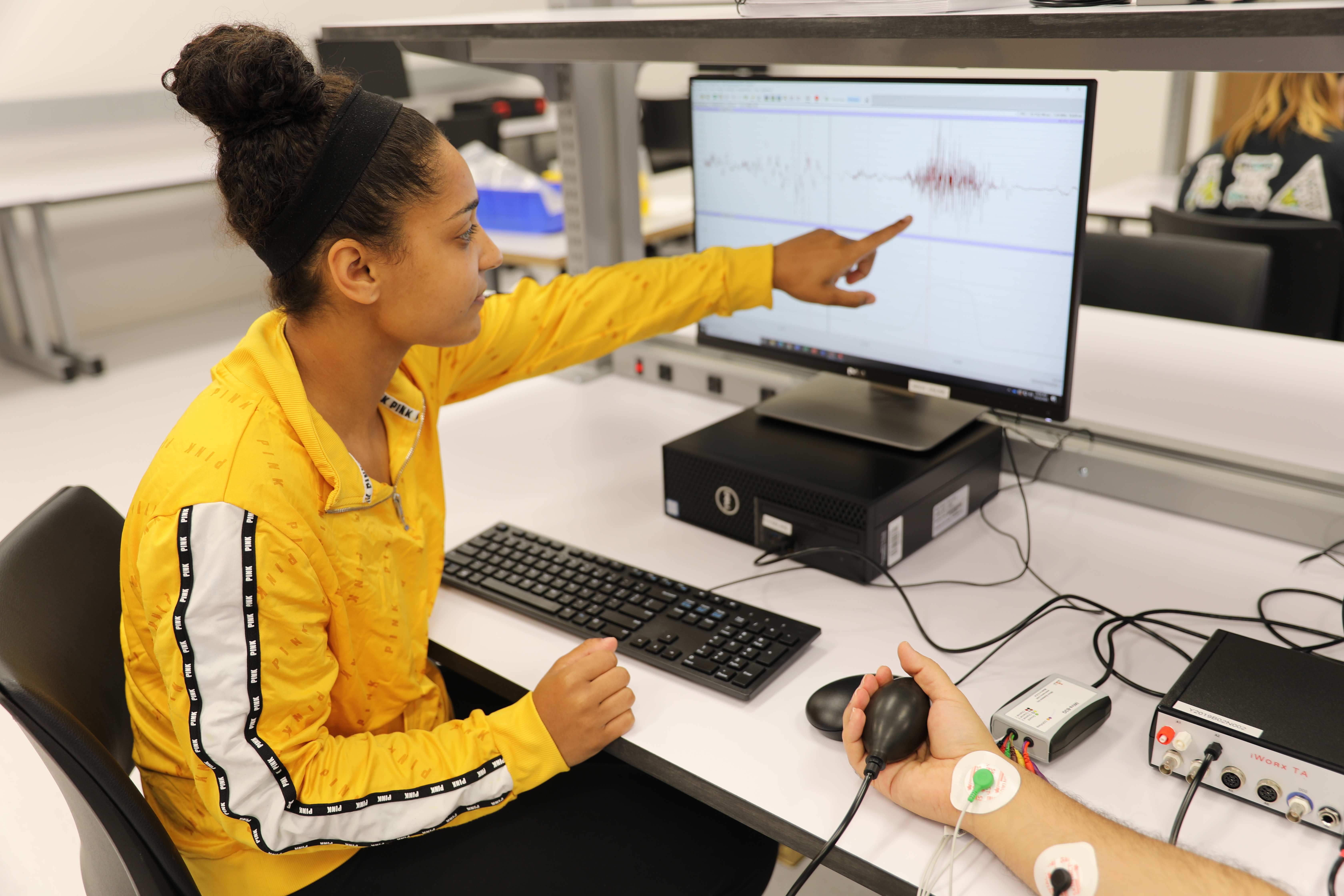
“Many of these activities would be technically possible, but not at the scale of OSC,” Hartley said. “The burden of system administration, management, maintenance, and the cost of maintaining a small cluster would limit the usability of the system for the purposes we currently use OSC.”
For students preparing for careers in computing, the experience extends beyond coursework.
“Most students do not have access to a Unix-like environment, certainly not at the scale of OSC,” Hartley said. “The ability to use OSC for development and use at scale positively impacts both education and personal research goals.”
Exposure to these systems also prepares students for the environments used by many major technology companies.
“All the FAANG companies—major technology firms such as Facebook (now Meta), Amazon, Apple, Netflix, and Google—use a Unix-like operating system as the backbone of their software systems,” Hartley said. “Without OSC, most students wouldn’t be getting exposure to that kind of environment until after graduation.”
That experience gives Mount Union students a valuable credential as they enter the workforce.
“The ability of our students to reference experience in a Unix-like environment on their CVs is something I find valuable,” Hartley said.
As Mount Union’s Campus Champion, Campbell also helps colleagues across campus discover how OSC can support their teaching and research.
“When I offer professional development sessions to colleagues, I routinely mention OSC and how it is currently deployed at the University of Mount Union,” Campbell said.
Looking ahead, Mount Union faculty are exploring new ways to expand OSC use in the classroom, including emerging tools that combine HPC with AI.
“I was excited to see OSC’s recent announcement of AI integration in Jupyter,” Campbell said. “We currently have students in some upper-level courses experiment with AI-assisted programming, and the ability to integrate AI within OSC’s systems is something we’ll likely explore in the future.”
As those capabilities evolve, Mount Union students will continue gaining experience with the same computing tools used by researchers and technology companies around the world—long before graduation.
Written by Lexi Biasi
The Ohio Supercomputer Center (OSC) addresses the rising computational demands of academic and industrial research communities by providing a robust shared infrastructure and proven expertise in advanced modeling, simulation, and analysis. OSC empowers scientists with the services essential to making extraordinary discoveries and innovations, partners with businesses and industry to leverage computational science as a competitive force in the global knowledge economy, and leads efforts to equip the workforce with the key technology skills required for 21st-century jobs.
