
At Ohio University, students and researchers are using the Ohio Supercomputer Center (OSC) to take on increasingly complex, data-intensive work—from simulating medical research problems to creating digital art with artificial intelligence.
For Robert Foreman, Ohio University’s Campus Champion for OSC, connecting researchers with OSC resources is a central part of his role. As manager of software engineering within the university’s Office of Information Technology and product manager for research computing, Foreman helps faculty and students navigate growing computational demands.
“If you have HPC needs, OSC should be your first stop,” Foreman said.
As a shared, statewide resource, OSC provides access to high performance computing (HPC) infrastructure that would be difficult for individual departments or research teams to build and maintain on their own.
That access is becoming more important as research demands continue to grow. For mathematics PhD student Muhammad Shahzeb Ali, the need for HPC became clear while working with more than 330,000 molecular conformations as part of his dissertation on molecular machine learning.
“For my dissertation, we used OSC to perform the large-scale computations required to train and evaluate machine learning models for molecular prediction tasks,” he said. “Without access to OSC’s computing infrastructure, completing these experiments in a reasonable timeframe would have been extremely difficult.”
By leveraging resources at OSC, Ali was able to process massive datasets efficiently and complete experiments that would have otherwise been out of reach with desktop computing or local systems.
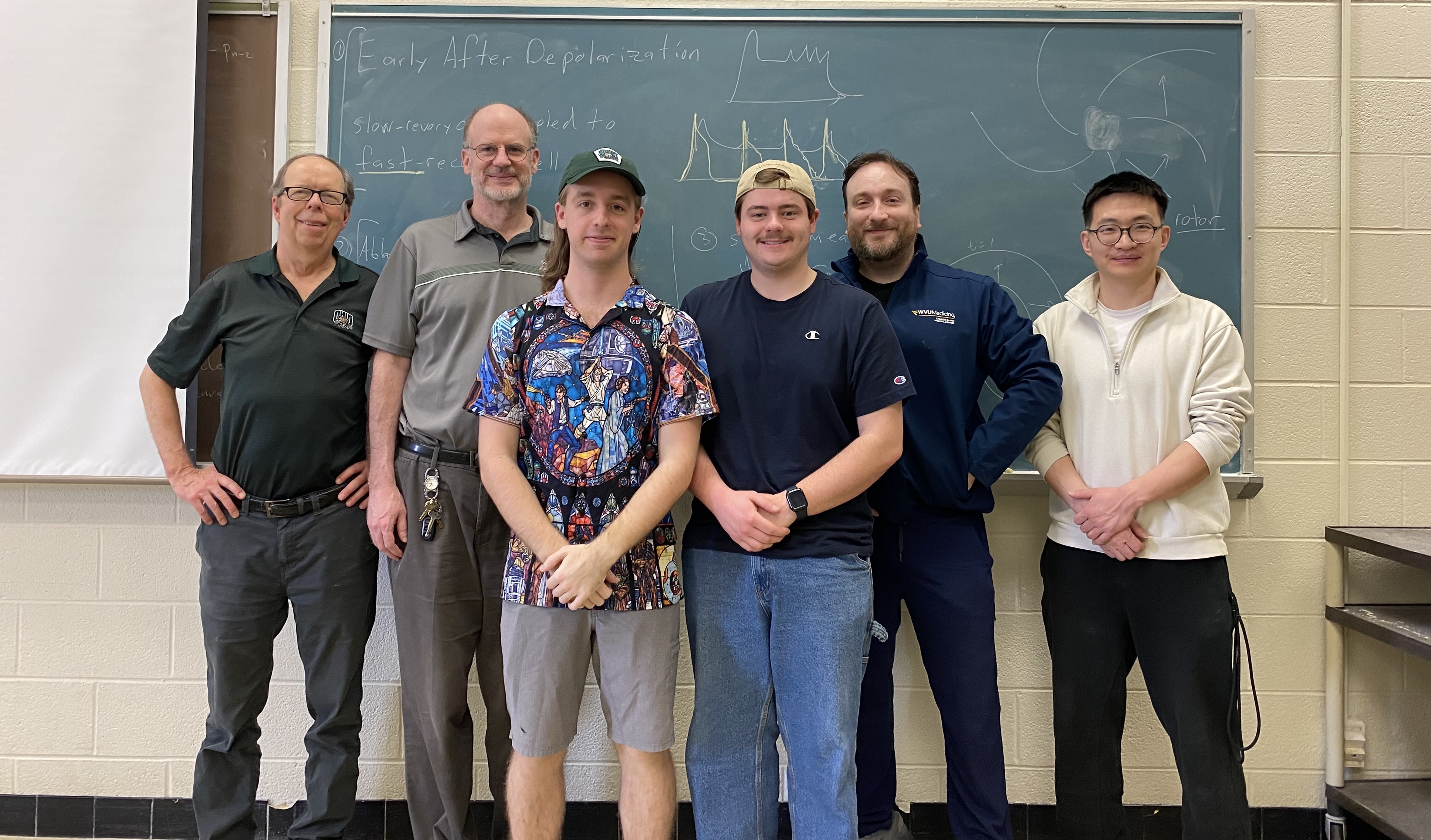
Across Ohio University’s mathematics department, similar needs are driving increased use of OSC, as students and researchers take on data-intensive problems that require scalable computing.
In one example, mathematics faculty and students are collaborating with cardiologist Alexander Hattoum, M.D., to better understand the causes of atrial fibrillation (AFib), the most common heart rhythm disorder. Working with Ohio University Professor Todd Young, the team is using mathematical modeling and simulation to study the electrical behavior of heart cells.
Undergraduate students have used OSC resources to simulate large-scale models of heart cell activity, generating patterns that reflect the chaotic behavior seen in AFib. These simulations are helping researchers explore the conditions under which the disorder may develop, with the goal of informing future treatment options.
Beyond research, OSC also supports creative applications across campus. In Ohio University’s Digital Art + Technology program, students working with Assistant Professor of Instruction Basil Masri Zada have used OSC resources to generate AI-driven artwork, including designing the signature artwork for Cardinal, an OSC supercomputer —demonstrating how access to advanced computing is expanding opportunities beyond traditional STEM fields.
For many students, that access represents their first opportunity to work with HPC resources.
“For a lot of these students, without OSC, they wouldn’t have access to an HPC environment at all,” Foreman said. “That’s a game changer.”
This exposure allows students to build skills in the same types of systems used in research labs, industry roles, and emerging technology fields, providing hands-on experience with tools and workflows expected in today’s workforce.
By using OSC, faculty and students aren’t hindered by the computational limitations of desktop computers or locally built systems.
In the past, research teams may have purchased their own hardware using grant funding, building small, independent clusters tailored to specific projects. While effective in the short term, those systems often come with long-term challenges that are difficult to sustain.
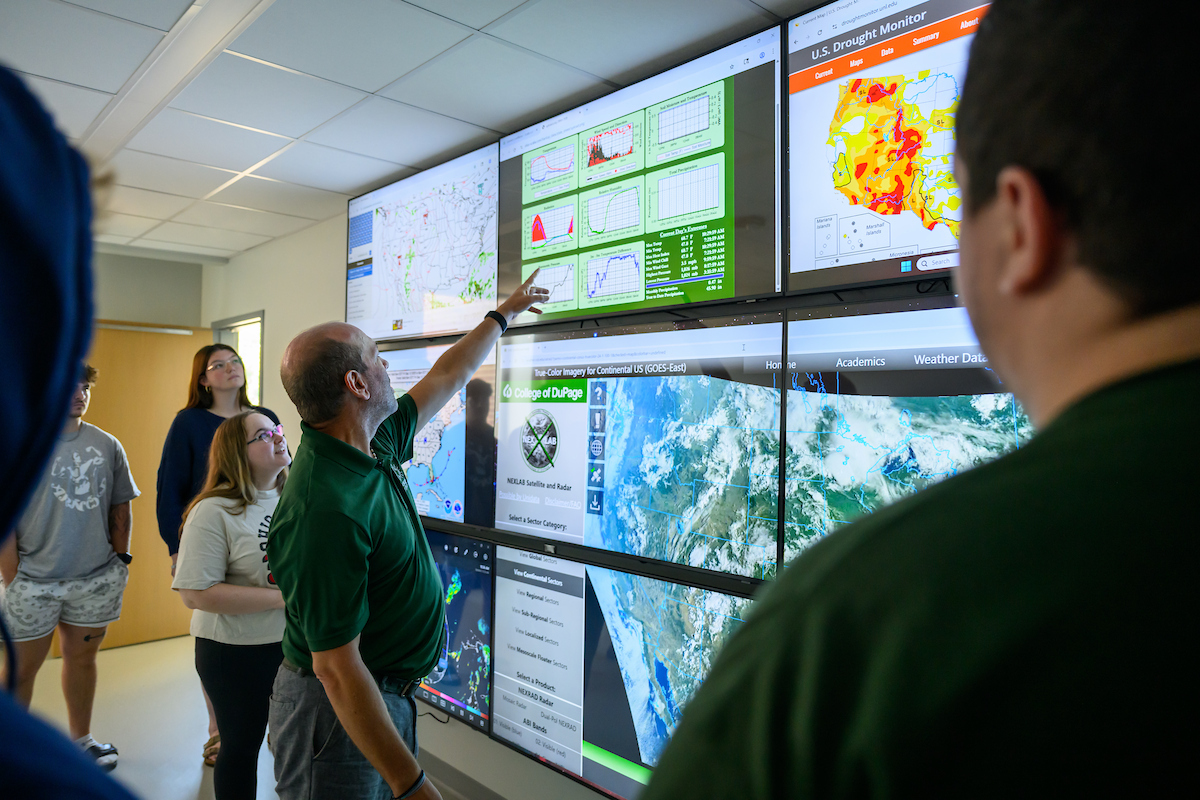
“With the current prices of memory and GPUs, that is becoming very cost prohibitive,” Foreman said.
Even beyond the initial investment, maintaining those environments requires ongoing support that is not always accounted for.
“They might run it for a year or two, and then they need someone to help run it,” he said. “They vastly underestimate the operational cost.”
As institutions navigate limited budgets and increasing student and faculty computational demands, the ability to rely on shared infrastructure becomes not only practical, but necessary.
In those cases, OSC provides a path forward, enabling students and researchers to move beyond the limits of traditional computing and focus on advancing their work.
Looking ahead, Foreman sees Ohio University continuing to rely more heavily on OSC as a central resource for research computing.
“I see us pushing more traffic to OSC,” he said. “The nice thing about OSC is that it’s accessible to anyone and everyone.”
Written by Lexi Biasi
The Ohio Supercomputer Center (OSC) addresses the rising computational demands of academic and industrial research communities by providing a robust shared infrastructure and proven expertise in advanced modeling, simulation, and analysis. OSC empowers scientists with the services essential to making extraordinary discoveries and innovations, partners with businesses and industry to leverage computational science as a competitive force in the global knowledge economy, and leads efforts to equip the workforce with the key technology skills required for 21st-century jobs.
