
At Wright State University, a public university in Dayton, Ohio, faculty and students are using the Ohio Supercomputer Center (OSC) to support hands-on coursework and data-driven research across campus.
For Mike VanHorn, Wright State’s Campus Champion for OSC, connecting users with these resources is a central part of his role. As senior computer systems administrator at the College of Engineering and Computer Science, VanHorn works closely with faculty and students while also helping expand awareness of OSC across campus.
“As a Campus Champion, it’s my duty to serve as a local proponent for access and utilization of OSC resources on Wright State’s campuses,” VanHorn said. “In practice, that means I try to direct Wright State’s faculty and students toward OSC whenever I see an opportunity for their work to be done more efficiently.”
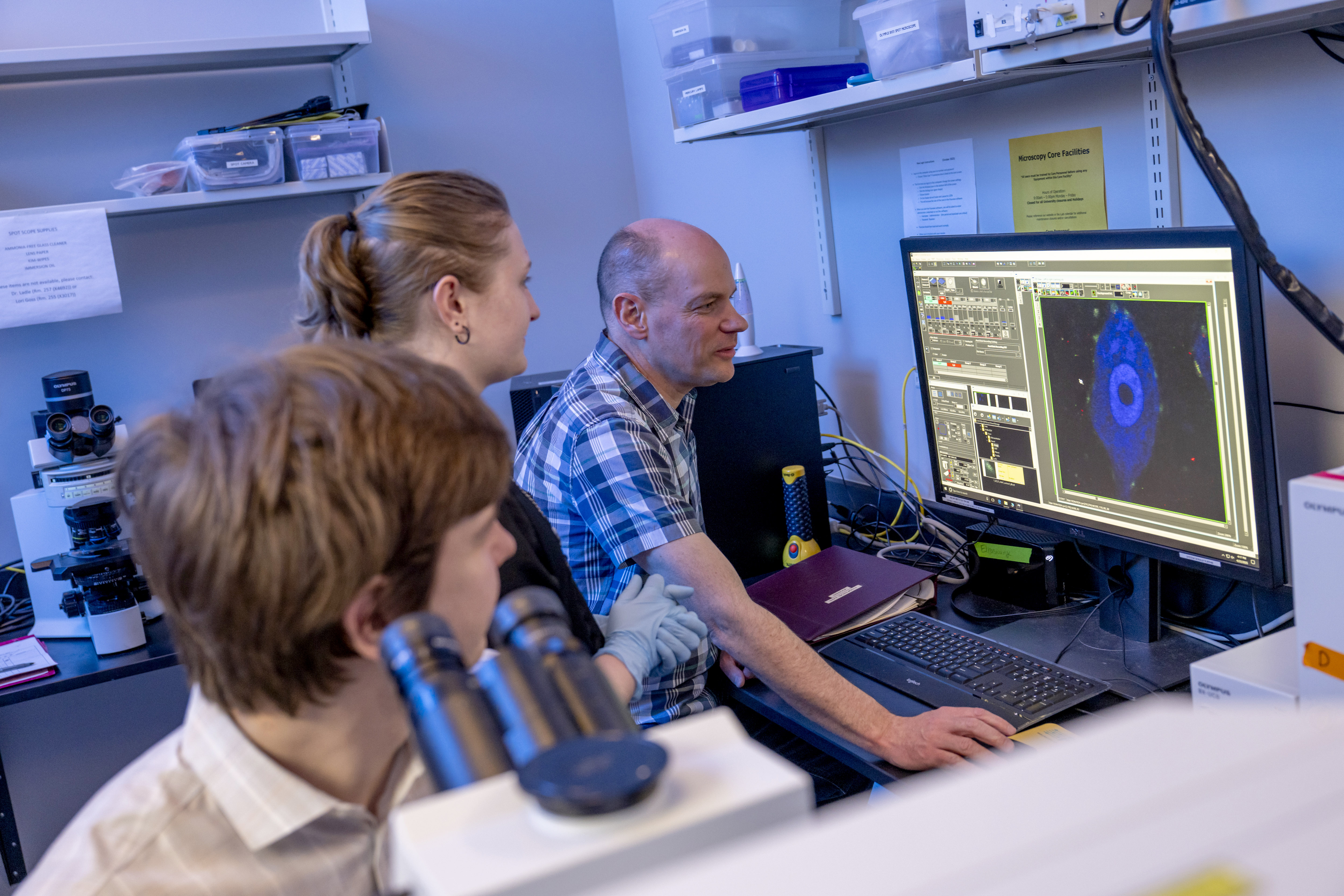
In the classroom, OSC gives students access to computing resources at a scale beyond what is available locally. In computer science and engineering courses, students write and submit parallel programs, test their code, and debug their work. Through this, they gain hands-on experience using tools commonly used in research and industry.
While Wright State maintains its own computing resources for instruction, those systems are designed for smaller-scale use. OSC provides access to significantly larger computing power, allowing students to run more complex jobs and work with datasets that would be difficult to handle locally, all within an environment that mirrors real-world research computing.
“Exposing our students to large-scale and leading-edge resources really gives them the perspective they need going forward,” VanHorn said. “It helps them understand the kinds of problems they’ll be able to solve using high performance computing.”
The same resources that support classroom learning are also being used for research across campus. Faculty are using OSC for projects ranging from machine learning and natural language processing to engineering simulations and quantum-based nanomaterials modeling.
In one project, psychology researchers are using machine learning techniques to analyze team communication in training environments, transforming large volumes of text into structured data that can be used to evaluate performance. In another, mechanical and materials engineering researchers are developing deep learning models to simulate complex manufacturing processes, helping reduce the computational demands of modeling multiphysics interactions.
“Performing Finite Element Method (FEM) and machine learning is not even possible without accessing OSC resources due to the sheer size of the simulation domain, the number of coupled differential equations, and the overall size of the required data for deep learning approaches,” said Hamed Attariani, faculty member in mechanical and materials engineering.
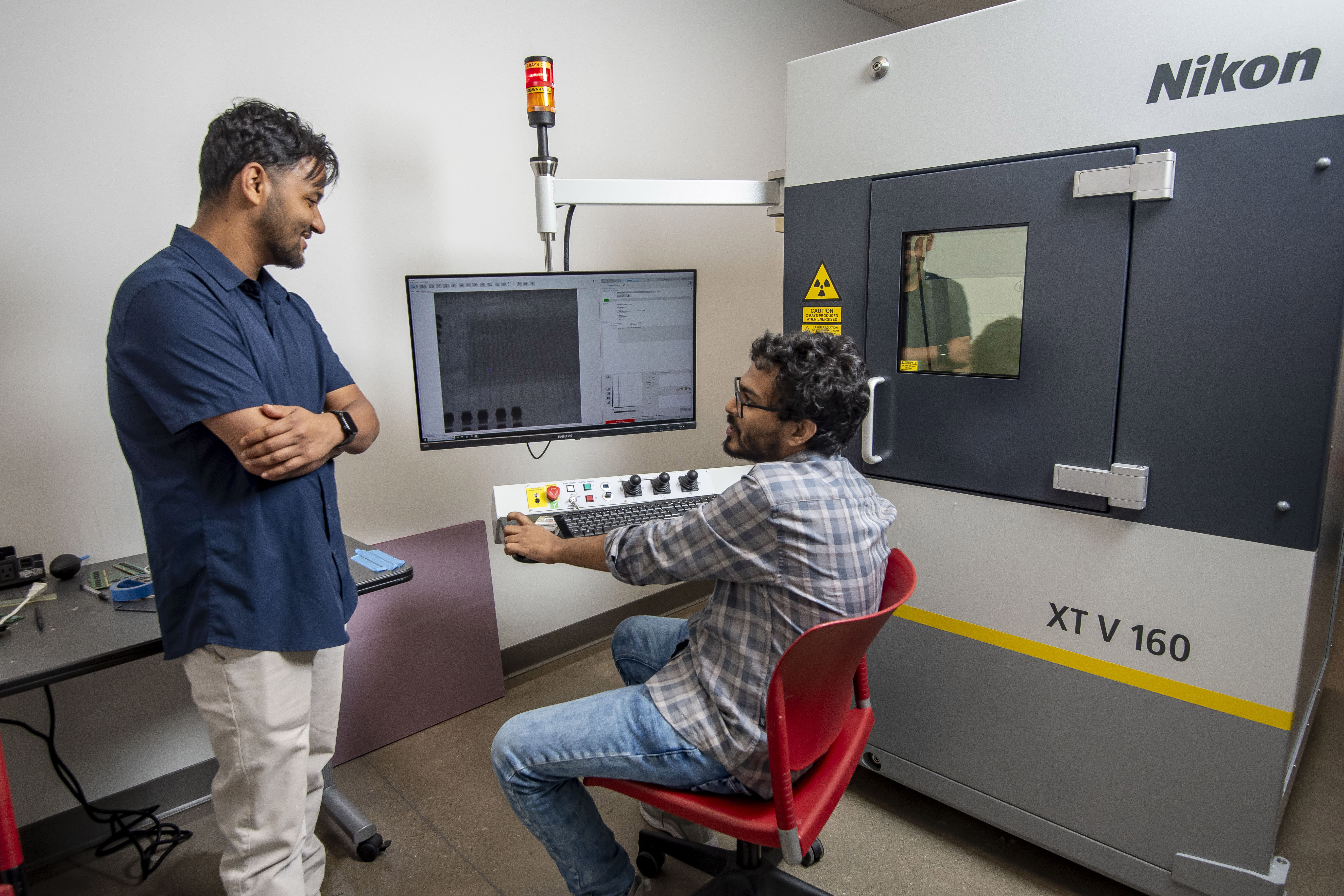
Across disciplines, VanHorn sees both the range of users and the variety of workloads as key strengths.
“The two things that jump out at me are the varied groups from Wright State that are using OSC, and the different types of workloads,” he said. “The wide range of applications that OSC can support is amazing.”
VanHorn is also working to build a stronger campus-wide community as more faculty and students begin using OSC. He created an internal user group to connect Wright State’s OSC users and is exploring ways to introduce the technology to a broader audience.
One idea under development is an “OSC Day,” which would bring introductory presentations and hands-on workshops directly to campus.
As Wright State continues to expand its research activity, VanHorn sees increasing awareness of OSC as a key step.
“I think a lot of students and faculty feel that there’s a learning curve with using HPC or are intimidated by the idea of learning a new way of doing things,” VanHorn said. “If we can show how accessible this technology is, it should increase the university’s research footprint and support continued growth in our R2 research activities.”
Written by Lexi Biasi
The Ohio Supercomputer Center (OSC) addresses the rising computational demands of academic and industrial research communities by providing a robust shared infrastructure and proven expertise in advanced modeling, simulation, and analysis. OSC empowers scientists with the services essential to making extraordinary discoveries and innovations, partners with businesses and industry to leverage computational science as a competitive force in the global knowledge economy, and leads efforts to equip the workforce with the key technology skills required for 21st-century jobs.
