
In 2025, the Ohio Supercomputer Center (OSC) demonstrated leadership in an era where artificial intelligence (AI), data-intensive research, and advanced cyberinfrastructure continued to shape priorities across higher education, government, and industry. Throughout the year, OSC staff engaged with national and international communities to share best practices, demonstrate new capabilities, and contribute to conversations defining the future of high performance computing (HPC).
These conferences and events allowed OSC to highlight its technical advancements while strengthening relationships across the broader research computing community. The center’s participation also reaffirmed its commitment to accessibility, collaboration, and support for users at every level.
“Each event gives us an opportunity to listen, learn, and share what we’re building in Ohio. The conversations happening in these communities shape how we evolve our services and ensure our researchers have the resources they need to push the boundaries of discovery,” said Dave Hudak, OSC executive director.
GOOD Conference 2025
The inaugural Global Open OnDemand (GOOD) Conference took place March 17–20 at Harvard University in Cambridge, Massachusetts, drawing 170 attendees from 10 countries. Developers, researchers, and HPC professionals gathered for four days of presentations and discussion centered on Open OnDemand—sharing how they deploy the platform, customize it for local needs, and support their research communities.
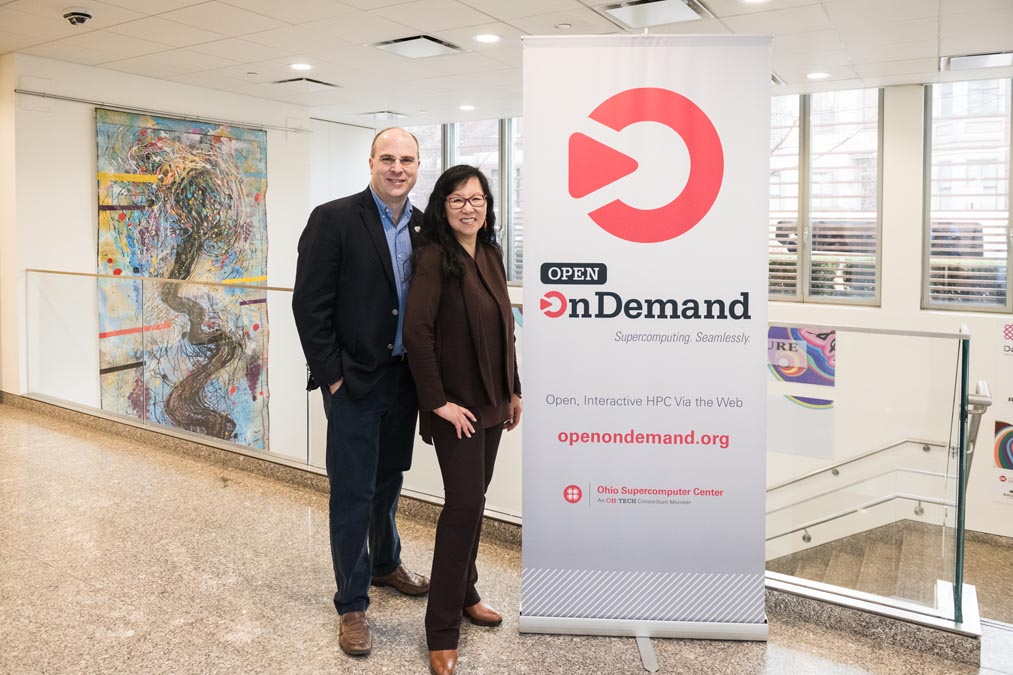
A large contingent from OSC participated, reflecting the center’s longtime leadership on the Open OnDemand project. More than 50 sessions explored topics ranging from user experience improvements and app development to workflow automation and growing international collaborations. OSC and Open OnDemand staff contributed to conversations that shaped the conference’s technical and organizational direction.
“Bringing the community together in one place showed how far Open OnDemand has come,” said Alan Chalker, OSC director of strategic programs. “What began as a local solution in Ohio is now a global gateway for research computing, and GOOD gave us a shared foundation for where we want to take it next.”
The momentum from the inaugural event sets the stage for GOOD 2026, which will take place March 9–12 at the University of Utah.
ISC 2025
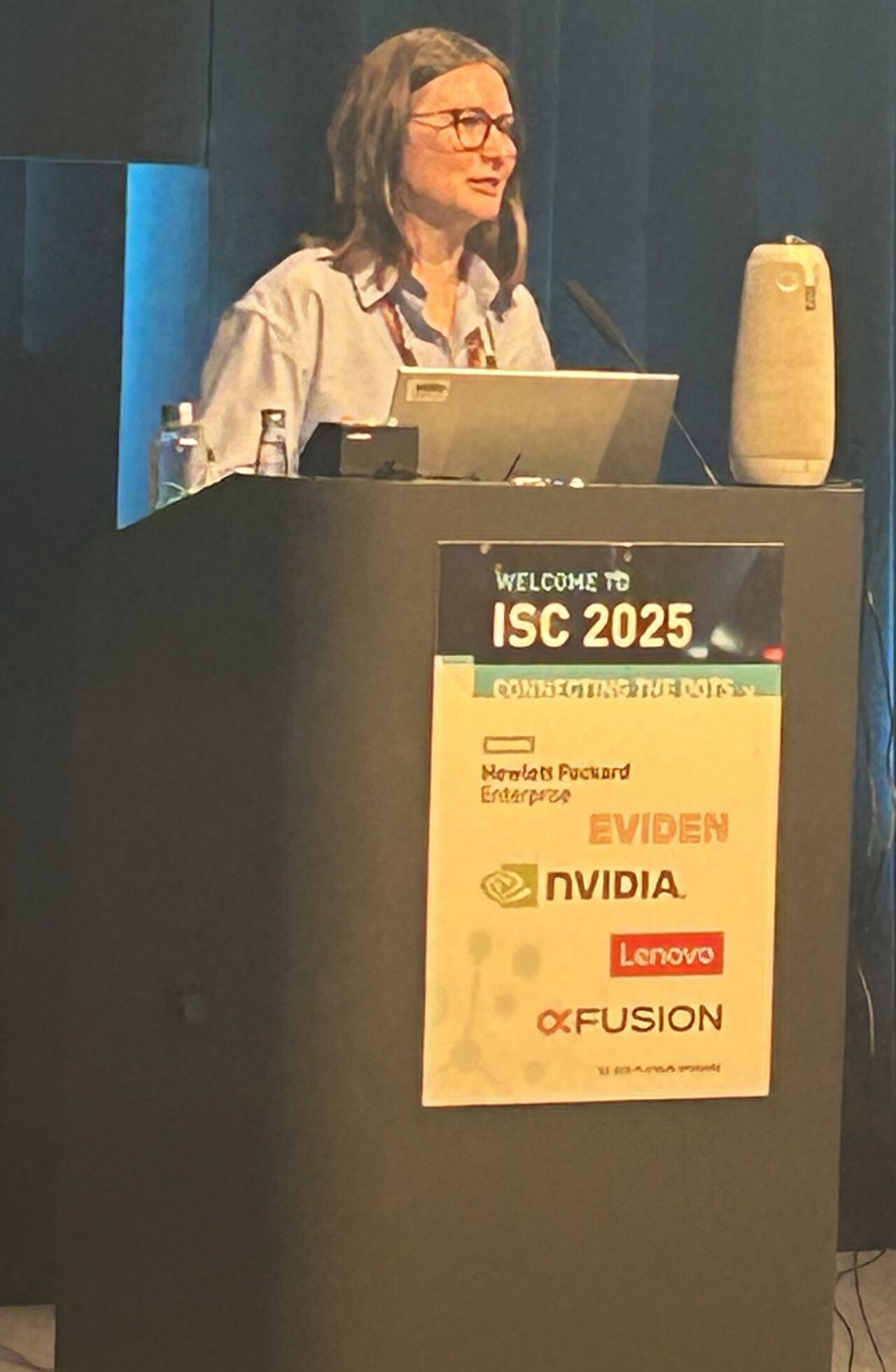
The ISC High Performance conference took place June 10–13 in Hamburg, Germany, bringing together researchers, industry leaders, and technology developers from around the world. Representing OSC this year were Chase Eyster, business development manager; Emily Moffat Sadeghi, developer relations program manager; and Karen Tomko, director of research software applications. The team hosted OSC’s booth for Open OnDemand, connecting with attendees interested in improving user access to HPC resources.
Sadeghi led a Birds of a Feather session focused on the Open OnDemand community, which drew more than 100 participants. The session highlighted how institutions are adopting the platform, shared new use cases, and encouraged open discussion around future development.
“ISC is always a meaningful touchpoint for Open OnDemand, especially as the user base continues to expand,” Sadeghi said. “Even though this is only our third year attending, it has become incredibly important for us to be there, connecting with different parts of the community, particularly colleagues across Europe, and hearing directly how they’re applying Open OnDemand in their environments. Those conversations help shape where we go next.”
PEARC25
The Practice and Experience in Advanced Research Computing (PEARC) conference took place July 20–24 in Columbus, bringing professionals from academia, government, and industry to Ohio for a week of discussion, collaboration, and community building in research computing. With the event hosted in OSC’s home city, many staff members attended or led presentations, hosted the exhibitor booth, and helped plan activities.
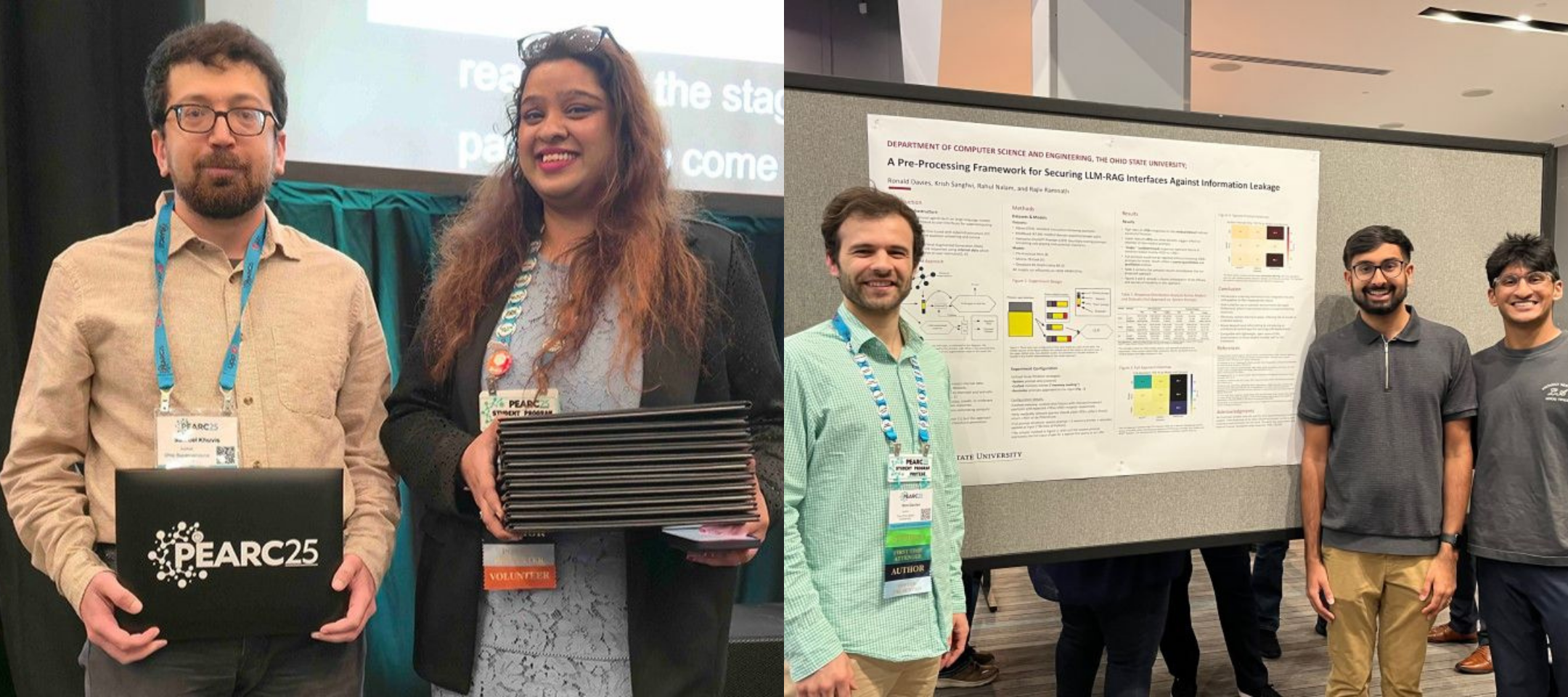
Several OSC-affiliated contributors received conference recognition this year. Senior Research Software Engineer Samuel Khuvis was part of the team honored with the Best Full Paper Award in the Applications and Software Track for “ML Field Planner: Analyzing and Optimizing ML Pipelines for Field Research.” Graduate student Ronald Davies and collaborators earned the Best Student Poster Award for “A Pre-Processing Framework for Securing LLM-RAG Interfaces Against Information Leakage.” In addition, Chalker, a long-serving member of the PEARC steering committee, received the first-ever Official Host City Ambassador Award.
“PEARC has always been a centerpiece for the research computing community, and having it here in Columbus made this year especially meaningful,” Chalker said. “The energy, collaboration, and recognition of our contributors reflect the strength of the community—not just at OSC, but across the entire ecosystem.”
Gateways Conference 2025
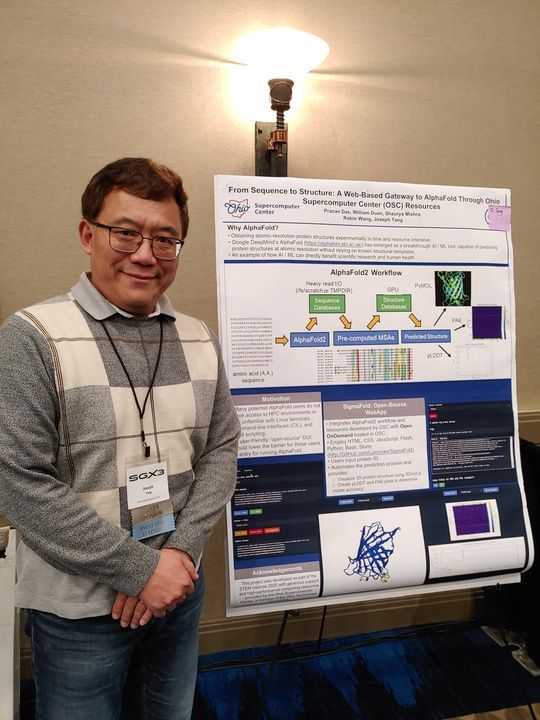
The annual Gateways Conference was held Oct. 28–30 in Green Bay, Wisconsin, bringing together developers, researchers, and educators who build and use science gateways to advance discovery. OSC HPC Storage Engineer Joseph Tang presented a poster developed from a STEM Institute project titled “From Sequence to Structure: A Web-Based Gateway to AlphaFold Through Ohio Supercomputer Center Resources.”
Created in collaboration with students Pranav Das, Williams Duan, Shaurya Mishra, and Robin Wang, the project introduces SigmaFold—a browser-based application that simplifies access to AlphaFold2 through OSC’s high performance computing resources. SigmaFold allows users to predict protein structures through a visual, easy-to-navigate interface, offering an accessible introduction to AI-driven biology and the power of HPC.
“Presenting this work at Gateways was exciting because it shows how quickly students can turn an idea into something real and usable,” Tang said. “SigmaFold lowers the barrier to exploring protein structure prediction and helps new users engage with HPC in a hands-on way.”
SC25
The SC25 conference took place Nov. 16–21 in St. Louis, Missouri, bringing together researchers, engineers, developers, and industry leaders for one of the world’s largest gatherings focused on HPC, networking, storage, and analytics. OSC and Open OnDemand staff hosted a joint exhibitor booth throughout the week, meeting with attendees interested in learning about OSC’s HPC capabilities and using Open OnDemand to improve access to HPC resources. In addition, OSC staff attended technical sessions highlighting the latest developments in the research computing field.
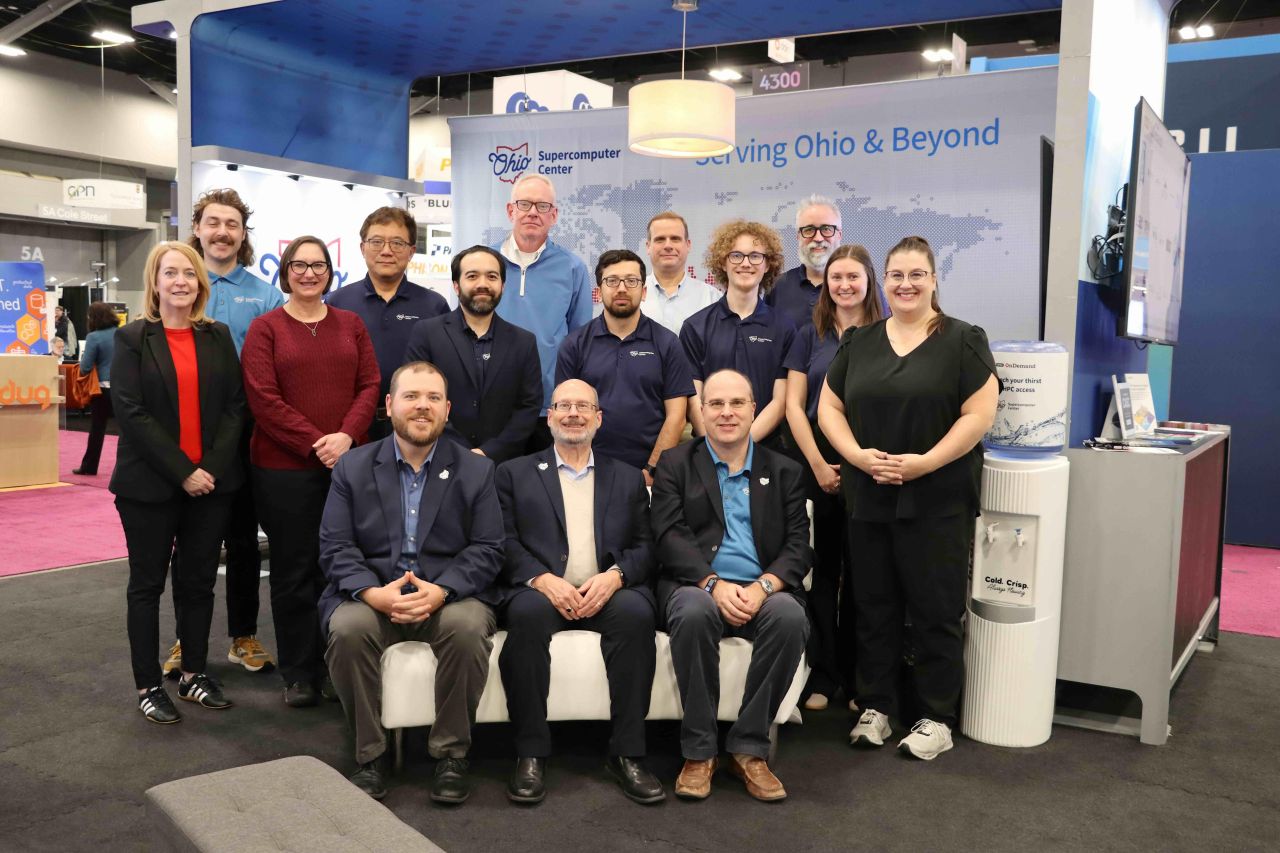
Chalker led multiple demonstrations of Open OnDemand, highlighting the platform’s simplicity and accessibility for supercomputing users. The Open OnDemand team also hosted two community open forums where current and prospective users of the platform could discuss ways to implement and customize Open OnDemand for their centers or institutions.
OSC additionally supported the conference’s Family Night event, welcoming children and families to explore supercomputing hardware up close, learn about the technology that powers scientific discovery, and take home the award-winning “What’s So Super About Supercomputing” activity book.
“The annual SC conference is a vital opportunity for OSC to connect with national peers, explore pressing topics in the HPC field, and continue strengthening the Open OnDemand community,” Hudak said.
Written by Lexi Biasi
The Ohio Supercomputer Center (OSC) addresses the rising computational demands of academic and industrial research communities by providing a robust shared infrastructure and proven expertise in advanced modeling, simulation and analysis. OSC empowers scientists with the services essential to making extraordinary discoveries and innovations, partners with businesses and industry to leverage computational science as a competitive force in the global knowledge economy and leads efforts to equip the workforce with the key technology skills required for 21st century jobs.
