OSC

Since 1987, OSC has been providing our clients services in four areas, or functions:

Supercomputing. OSC provides the computational power and storage that scientists need to meet their research goals.  Whether researchers need to harness the incredible power of a parallel processor cluster to better understand deep space, a vector processor machine to do weather modeling, or a mid-size shared memory processor system to model the human heart, OSC has the hardware and software solutions to meet their needs.

Research. A staff of high performance computing and networking research experts maintain active research programs in HPC and Networking, Homeland Security and Defense, Environmental Sciences, Engineering and Life Sciences. Our goals are to lead science and engineering research efforts, assist researchers with custom needs and collaborate with regional, national and international researchers in groundbreaking initiatives.

Education. OSC has a national reputation for its training and education programs. Staff teach faculty and student researchers through scientific computing workshops, one-on-one classes, and web-based portal training. Ohio students gain exposure to the world of high performance computing and networking during our annual summer institutes for young women in middle school and for junior and senior high school students. And, the statewide, virtual Ralph Regula School of Computational Science coordinates computational science and engineering education activities for all levels of learning.

Cyberinfrastructure. The Ohio Supercomputer Center’s cyberinfrastructure and software development researchers provide the user community with various high performance computing software options. This variety enables researchers to select parallel computing languages they most prefer, and just as important, it creates a test bed for exploring these systems. By taking a holistic approach to generating efficient supercomputing applications for researchers, the Center’s cyberinfrastructure and software development research capitalizes on all the components within the cycle of innovation — development, experimentation, and analysis - and continuously improves the services provided.

University of Hawai'i Awarded Multi-million Dollar Contract for Maui Supercomputing Center

The Air Force Research Laboratory announced today that the University of Hawai'i (UH) has been awarded the contract to operate and manage the Maui Supercomputing Center, located at the Maui Research and Technology Park in Kihei. The contract, which will begin October 1, 2001, may be extended for up to 10 years and has a potential value of $181 million. This is the largest single contract award in the history of the University of Hawai'i.

Blue Collar Computing Concept Sparks Imagination of Supercomputing Industry Insiders

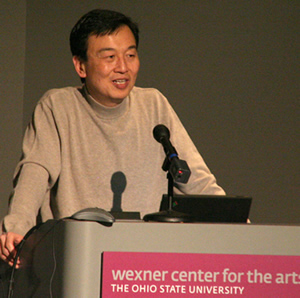
Ohio Supercomputer Center (OSC) Executive Director Stan Ahalt’s Blue Collar Computing speech on high performance computing (HPC) for industry and research applications received enthusiastic support at the SC2004 conference in Pittsburgh, Pa., last week.

As more than 1,000 international audience members listened, Ahalt explained that HPC has reached a critical juncture as economic forces continue to shape its market segment.

OSC-Springfield, Raytheon Collaborate on Computing Technology Development

The Ohio Supercomputer Center’s Springfield Ohio facility (OSC-Springfield) has signed an agreement with Raytheon’s Intelligence and Information Systems business to investigate new technologies using OSC’s high performance computing and storage systems and Ohio’s new Third Frontier Network (TFN).

OSC-Springfield Director Kevin Wohlever said a number of high performance and data-intensive computing technologies will be investigated using Raytheon’s systems. The agreement is effective for the remainder of 2004, with contracts renewable in both 2005 and 2006.

OSC, OSU and Johns Hopkins Team Up In Distance Learning Effort

Biophysics and engineering students from Johns Hopkins University and The Ohio State University (OSU) successfully used distance learning technology to participate in a short course, Molecular Modeling of Biological Interactions. Lectures culminated on March 31with two classes – one at the Ohio Supercomputer Center (OSC) and one at Hopkins more than 400 miles away. The classes studied how high performance computing (HPC) can advance scientific discovery in the biological sciences.

Pages